
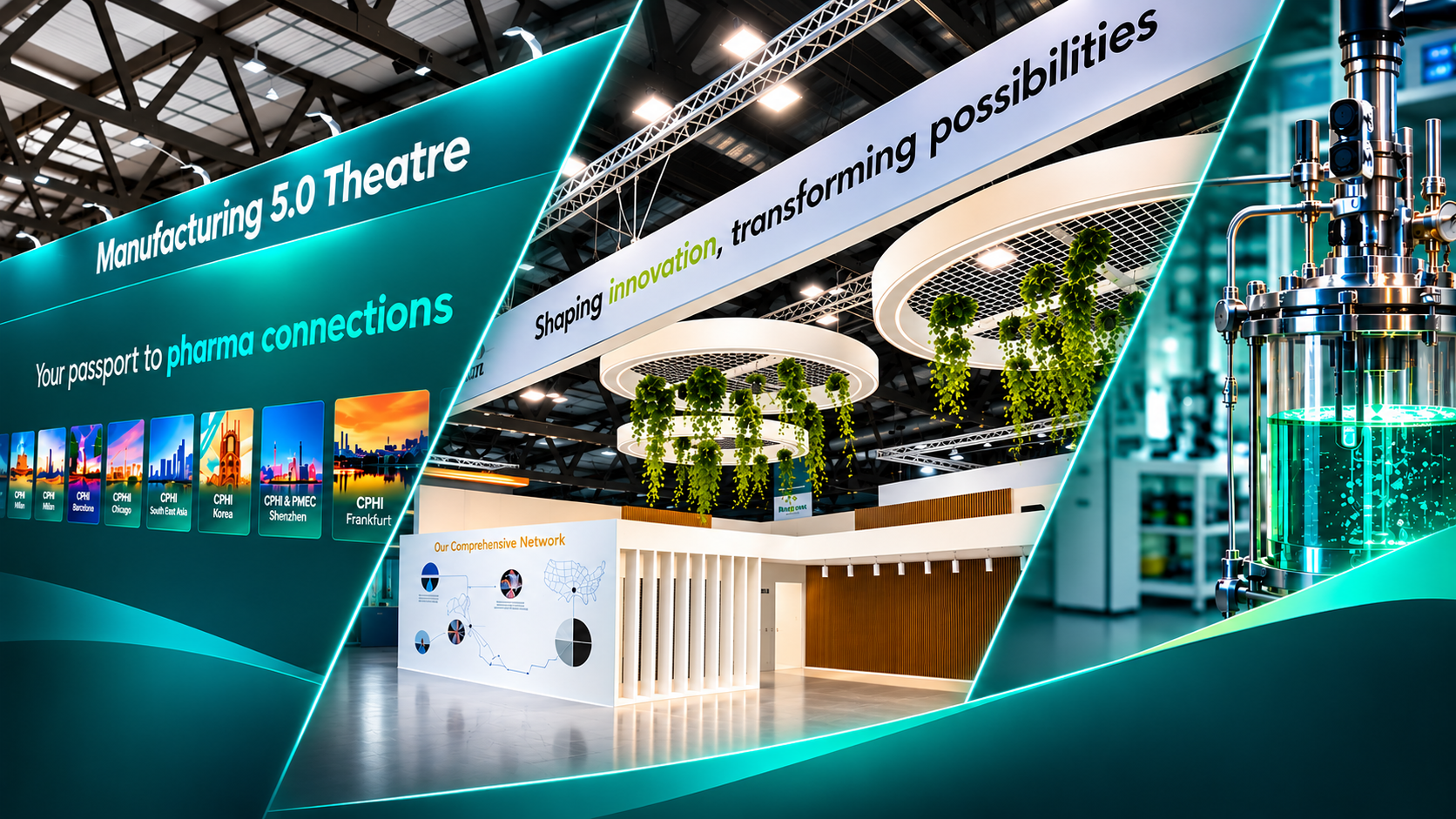
Three days, countless conversations and a rather impressive number of exhibition halls.
From 6–8 October, Rockstone Engineering joined the global pharmaceutical community at CPHI Milan 2026, where manufacturers, CDMOs, technology providers and industry leaders gathered to explore what’s next for pharmaceutical development and manufacturing.
CPHI has always been an impressive display of the industry’s scale. But beyond the exhibition stands, ambitious expansion plans and very full meeting schedules, something more interesting was taking shape.
The conversation is shifting from what pharmaceutical manufacturers can build to how effectively they can deliver it.
For an engineering business operating across Ireland and Switzerland, that distinction matters.
The CDMO landscape is changing, and quickly
One of the most interesting aspects of CPHI was the opportunity to engage with and learn more about organisations operating across different areas of pharmaceutical development and manufacturing.
Companies including ten23 health, CordenPharma, Aenova Group, PCI Pharma Services and SK pharmteco offered a valuable cross-section of an increasingly specialised industry.
Different organisations, different manufacturing capabilities, but all operating in a market where expectations continue to rise.
CDMOs are no longer competing on manufacturing capacity alone. Technical expertise, development timelines, manufacturing flexibility and the ability to support increasingly complex therapies are becoming important differentiators.
The industry’s growing interest in biologics, peptides, antibody-drug conjugates and other complex modalities reflects this evolution. CPHI’s own programme explored how CDMOs are moving beyond traditional capacity provision towards deeper technical partnerships and execution excellence.
And while expansion announcements naturally attract attention, there is a less glamorous question behind every new manufacturing facility:
Who is going to engineer, automate, validate and ultimately deliver it?
That is where the conversation becomes particularly relevant to Rockstone.
Bigger ambitions demand more connected engineering
As pharmaceutical manufacturing becomes more sophisticated, the relationship between process engineering, automation, manufacturing execution systems and commissioning and qualification becomes increasingly important.
A facility can have world-class equipment, significant investment and an ambitious delivery schedule. But bringing those elements together into a functioning, compliant manufacturing environment is an entirely different challenge. Consider a new biologics production line.
Process requirements need to translate into automation strategies. DCS, such as Emerson DeltaV, need to integrate with manufacturing processes. MES platforms must support reliable electronic batch execution, while commissioning, qualification and validation activities need to progress alongside the wider project.
None of these disciplines operates in isolation. And when project timelines tighten, the consequences of disconnected engineering become considerably more visible.
At Rockstone Engineering, this is precisely the environment we work within: supporting pharmaceutical and biotechnology projects with specialist expertise across process automation, DCS, MES, CQV and project delivery.
The real value isn’t simply having engineers available. It’s having the right technical expertise at the right stage of delivery.
Digital manufacturing: beyond the impressive presentation
Digitalisation remained a prominent theme at CPHI, with artificial intelligence, manufacturing optimisation and data-driven decision-making featuring across the event’s industry discussions. There is certainly no shortage of ambition when it comes to the factory of the future.
But between an impressive digital manufacturing presentation and a validated system operating reliably on a production floor, there is a considerable amount of engineering work.
For established pharmaceutical sites, digital transformation can mean integrating new technologies with systems that have been operating for years. For new facilities, it means making critical architectural decisions early enough to avoid expensive complications later. MES implementation, recipe development, system integration, data integrity and automation readiness may not always command the largest exhibition displays.
They are, however, fundamental to whether a manufacturing operation performs as intended. The opportunity is not simply to introduce more technology. It’s to make existing and emerging technologies work better together.
Speed is becoming a competitive advantage. So is getting it right.
Another interesting development around CPHI was the growing emphasis on shortening development and manufacturing timelines. Several CDMO announcements highlighted efforts to reduce technical handovers, accelerate development programmes and create more integrated manufacturing services.
For pharmaceutical manufacturers, speed matters. But in a highly regulated environment, speed without control is hardly an attractive proposition. Accelerating a project cannot come at the expense of process reliability, documentation quality or regulatory compliance. This creates a balancing act for engineering and project teams.
Manufacturers need the flexibility to scale resources, introduce specialist knowledge and respond to changing project demands without compromising quality. It is one reason we believe engineering-led delivery models have an increasingly important role to play.
Whether supporting a DCS upgrade, MES implementation, technology transfer or CQV programme, the objective remains consistent: bring practical expertise into projects where it can make a measurable difference.
From Milan to Ireland and Switzerland: the conversations worth continuing
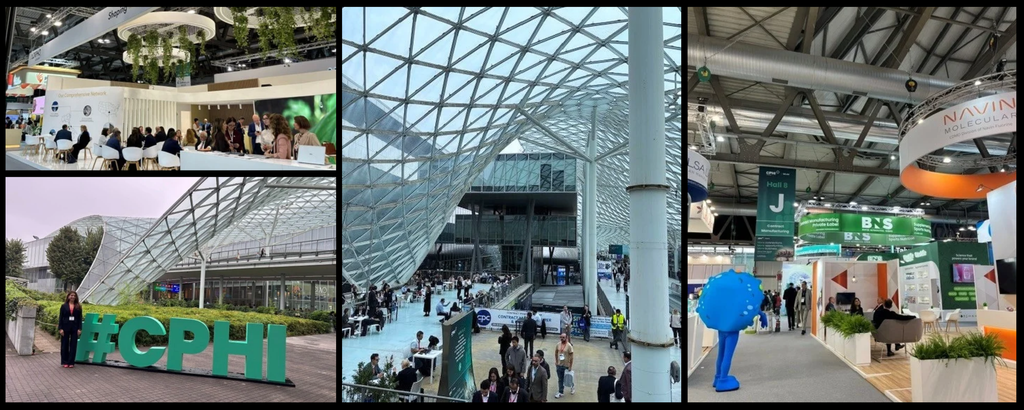
For Rockstone, CPHI was also an opportunity to strengthen relationships across the wider pharmaceutical ecosystem.
Our conversations and connections across many organisations, reinforced the value of looking beyond individual projects and understanding how different businesses approach engineering delivery, partnerships and technical resourcing. Not every conversation at an event like CPHI needs to end with an immediate opportunity. Sometimes the most valuable outcome is a better understanding of how another organisation operates, where its technical priorities lie and what future collaboration could look like.
For an Irish-Swiss engineering company, maintaining those international relationships is especially important. Our work connects specialist engineering expertise with pharmaceutical and biotechnology projects across two highly active life sciences markets.
Events such as CPHI allow us to develop that network while staying close to the organisations shaping the next generation of manufacturing.
The takeaway: manufacturing ambition needs engineering execution
CPHI Milan 2026 offered plenty of reasons to be optimistic about the direction of the pharmaceutical industry. CDMOs are developing increasingly specialised capabilities. Digital technologies are creating new possibilities. Manufacturers are exploring faster, more flexible ways to bring therapies to market.
Yet behind every expansion, technology investment and manufacturing milestone sits the same fundamental requirement: people who understand how to turn complex plans into operational reality.
For Rockstone Engineering, that is the most relevant takeaway from Milan.
As the industry continues to evolve, we see growing importance in connecting process knowledge, automation expertise, MES and CQV throughout the project lifecycle. The future of pharmaceutical manufacturing will not be defined by ambition alone. It will be defined by how well that ambition is engineered.
Thank you to everyone we connected with throughout CPHI Milan 2026.